From information to expertise
Information, knowledge, intelligence, judgment and expertise are five words people use as if they meant the same thing. They do not. Each one builds on the last, and the difference matters when you are deciding what a system can hold and what only a person can do. One example runs through the page: an invoice from a supplier called Acme.
The five in one picture
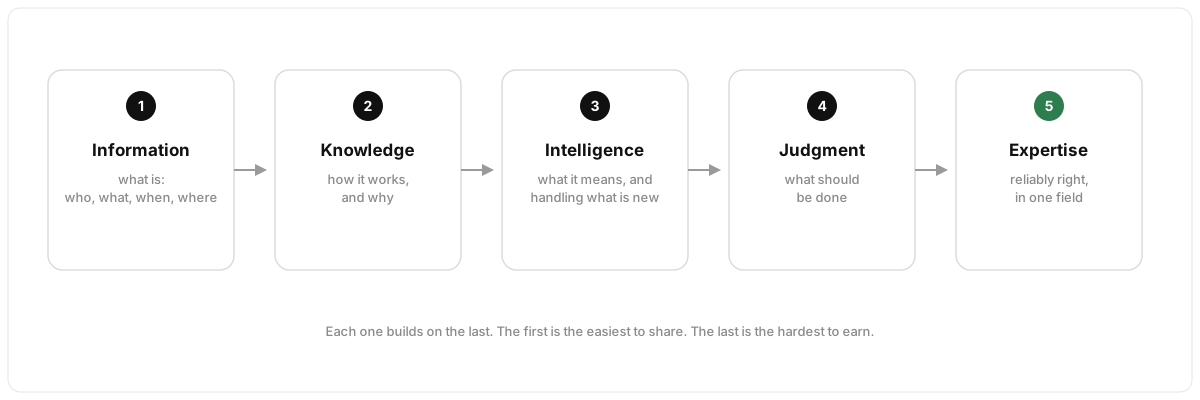
Information: what is
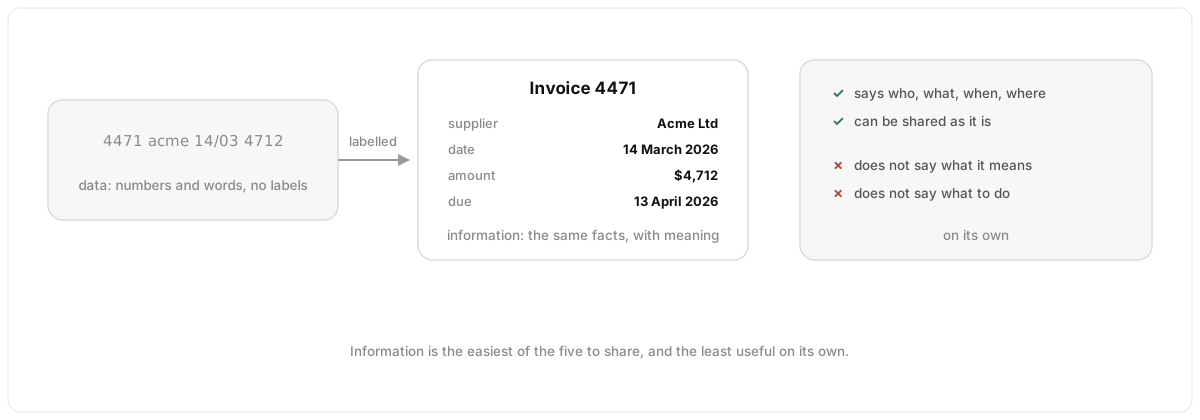
Raw data is numbers and words with no labels. Give them labels and context and you have information: invoice 4471, from Acme Ltd, dated 14 March, for $4,712, due 13 April. It answers who, what, when and where. It can be shared exactly as it is. What it cannot do, on its own, is tell you what it means or what to do about it.
Under the hood
Information is organised, contextualised data that carries meaning. It is relatively objective once structured, and transferable: two people who receive the same invoice hold the same information. It sits one step up from data in the classic data, information, knowledge, wisdom ladder, and it is the layer that documents, databases and search indexes hold directly.
Knowledge: how it works, and why
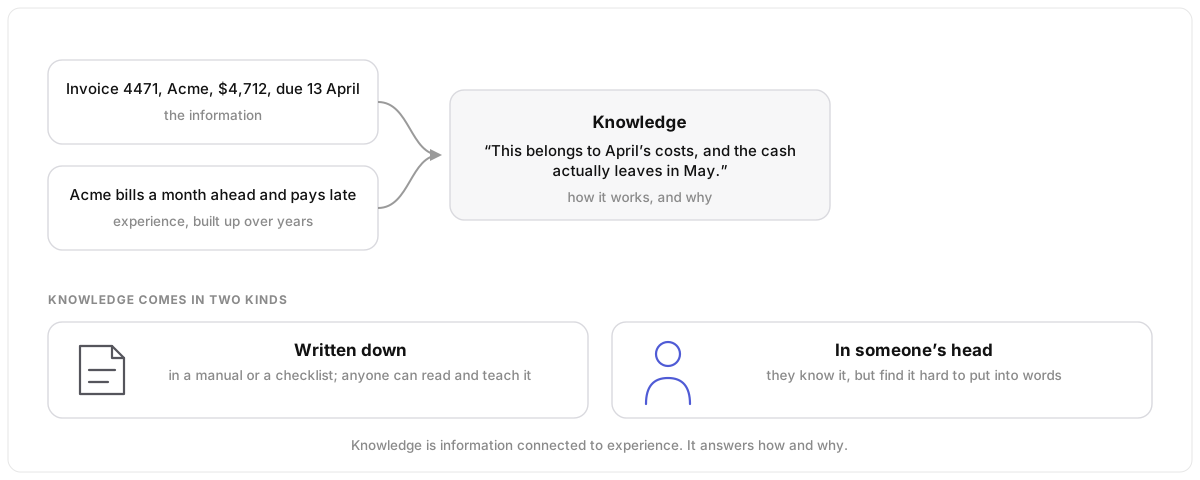
Connect the information to experience and it becomes knowledge. Someone who has dealt with Acme for years knows that Acme bills a month ahead and pays late, so this invoice belongs to April’s costs and the cash actually leaves in May. Knowledge answers how and why. Some of it can be written down in a manual and taught. Some of it stays in a person’s head, and they find it hard to put into words.
Under the hood
Knowledge is information that has been internalised, connected, interpreted and integrated with experience. Philosophers describe it as justified true belief; practitioners care more about whether it works and improves with use. The two kinds are explicit knowledge (codified, teachable, the kind a practice manual holds) and tacit knowledge (embodied, hard to articulate, the kind a senior shows rather than explains). One can hold a great deal of knowledge without being an expert.
Intelligence: one word, two meanings
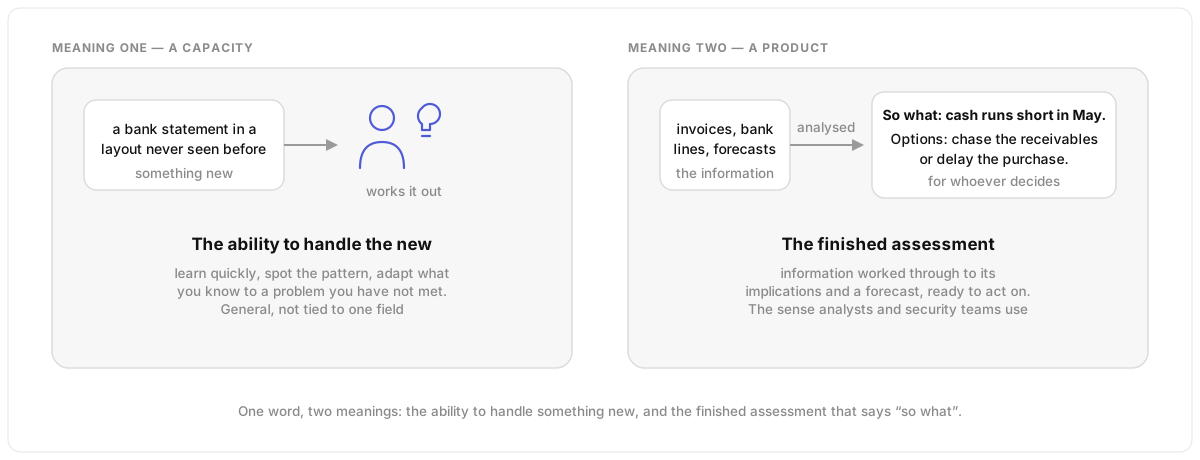
The first meaning is a capacity: the ability to learn quickly, spot a pattern, and adapt what you know to something you have not met before, like a bank statement in a layout you have never seen. It is general, not tied to a field. The second meaning is a product: information that has been analysed and worked through to its implications, ready for someone to act on. “So what: cash runs short in May. Chase the receivables or delay the purchase.” That is the sense analysts and security teams use.
Under the hood
Capacity: the ability to acquire, reason with, adapt and apply information and knowledge: novel problem solving, learning, pattern recognition. Psychologists split it into fluid intelligence (handling new problems) and crystallised intelligence (accumulated knowledge and skill, which is what expertise draws on).
Product: in intelligence analysis the chain is data, then information, then intelligence, where intelligence is information that has been assessed for implications, forecast, and made actionable for a decision-maker. Knowledge and judgment are the human faculties that do the transforming.
Judgment: what should be done
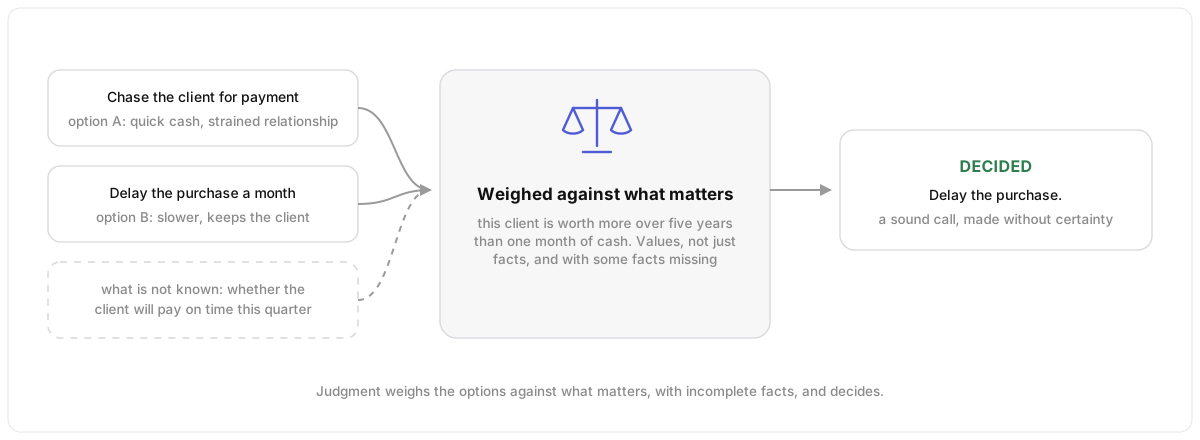
The assessment gives two options. Judgment picks one. It weighs the options against what matters: this client is worth more over five years than one month of cash, so delay the purchase. Judgment brings in values, not just facts, and it decides even when some facts are missing. It is the closest of the five to what people call wisdom.
Under the hood
Judgment is the capacity to evaluate situations, weigh options, apply values or principles, and reach sound conclusions under uncertainty or incompleteness. It is about decision quality rather than knowing or raw problem-solving power: it operates on knowledge and intelligence products. Many frameworks place wisdom, sound judgment informed by values and broad understanding, at the top of the data, information, knowledge, wisdom ladder. Judgment is what turns knowledge into wise action.
Expertise: all of it, in one field
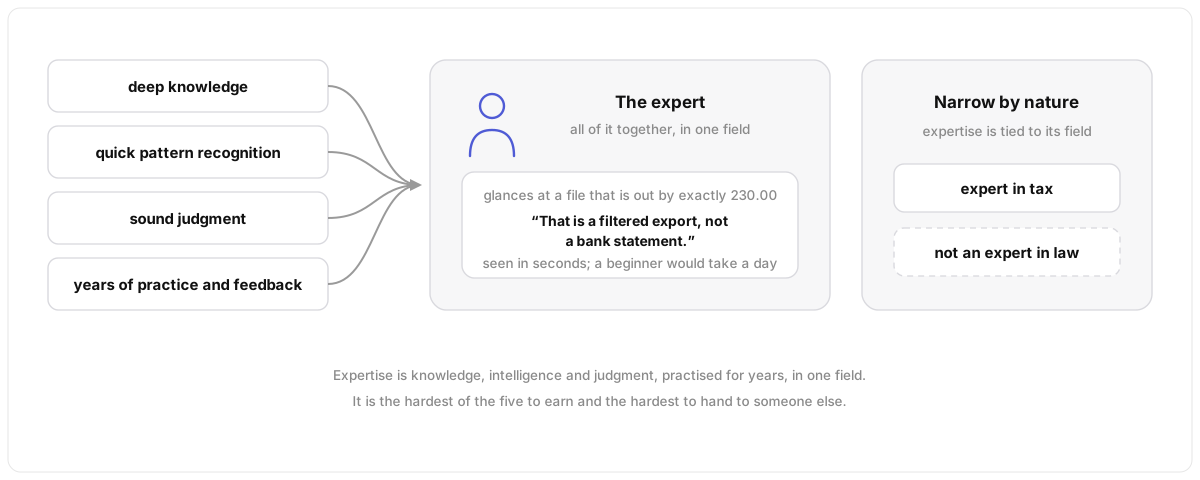
Expertise is deep knowledge, quick pattern recognition and sound judgment, practised for years with feedback, in one field. A senior accountant glances at a file that is out by exactly 230.00 and says “that is a filtered export, not a bank statement” in seconds, where a beginner would take a day. Expertise is narrow by nature: an expert in tax is not an expert in law. It is the hardest of the five to earn, and the hardest to hand to someone else.
Under the hood
Expertise is a high degree of specialised, domain-specific knowledge and skill, developed through extensive deliberate practice, experience and feedback. Experts hold both deep declarative knowledge and efficient procedural, tacit know-how; they recognise patterns quickly and perform at a superior level within their domain, and display rapid, high-quality judgment in familiar situations. Expertise draws heavily on crystallised intelligence. Fluid intelligence helps in building it, but domain practice is essential, and it does not transfer between domains.
Side by side
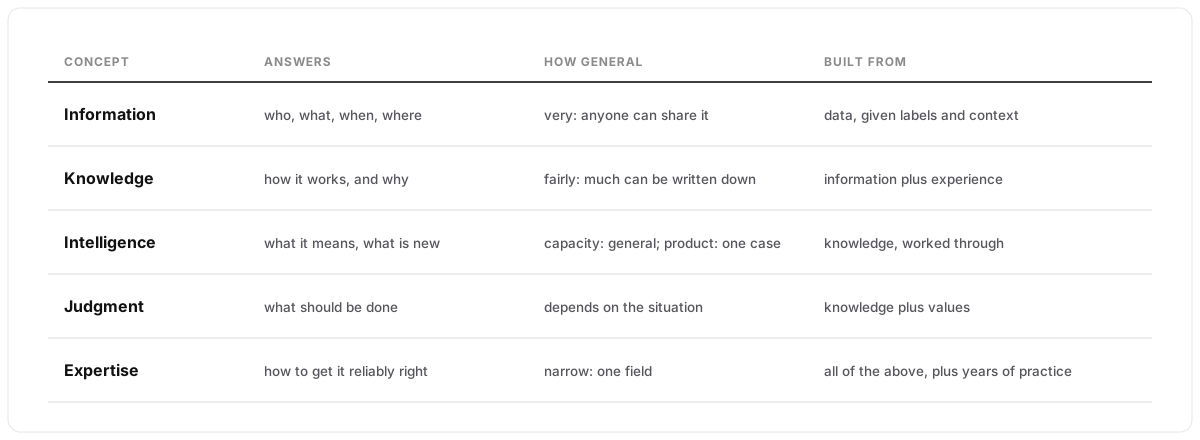
They differ in what question they answer, how general they are, and what they are built from. Information is the most basic and the most transferable. Expertise is the most specialised and the hardest won.
Under the hood
The concepts differ in level of processing, scope, generality and role in action. Intelligence as a capacity is general and partly developmental; expertise is acquired and domain-bound. Judgment emphasises normative evaluation and decision quality over knowing or problem-solving power. Knowledge is broader and more foundational than expertise: expertise requires substantial knowledge plus skilled application, but knowledge alone does not make an expert.
How they feed each other
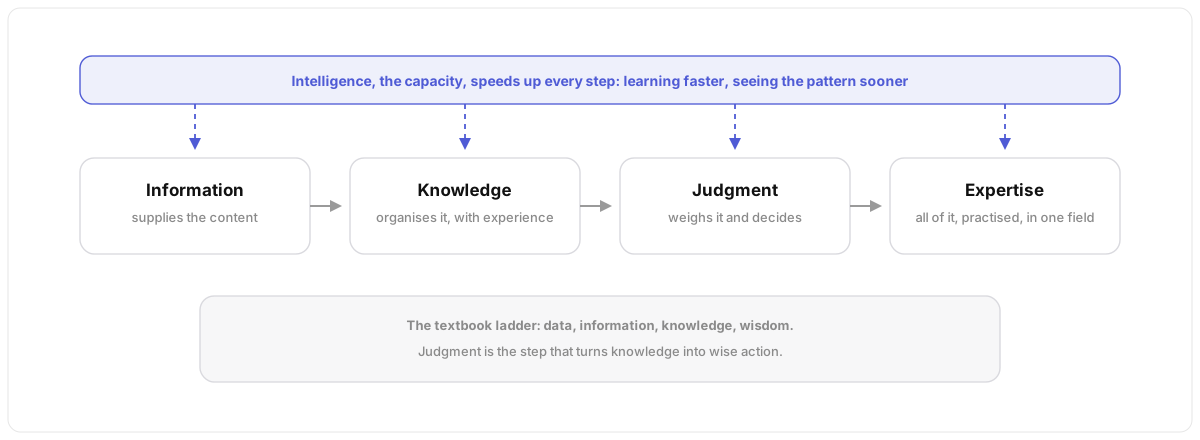
They are not five separate boxes. Information becomes knowledge when it is connected to experience. Knowledge is what judgment weighs. Expertise is knowledge, judgment and practice fused in one field. And intelligence, the capacity, speeds up every step: a quick learner builds knowledge faster and sees the pattern sooner, though nothing replaces the years of practice.
Under the hood
Information is the raw material that becomes knowledge when processed with context, experience and meaning. Knowledge fuels both intelligence as a capacity (smarter application, further learning) and intelligence products (analysed assessments). Intelligence accelerates the acquisition of knowledge and the development of expertise. Judgment operates on knowledge and intelligence products and turns them into action. Expertise integrates all of the above within a domain. A useful model treats them as layers that enable one another: information supplies content, knowledge organises it, intelligence processes and adapts it, judgment evaluates and decides, and expertise is the refined, high-performance integration of these in a specific field.