Six stages, from preparer to adviser
AI can now read client documents well. The hard part is checking what it read. Here is how staff in an accounting practice move, one stage at a time, from typing figures to reviewing them and then to giving advice, and what the Document Substrate takes over at each stage.
The change: from doing to deciding
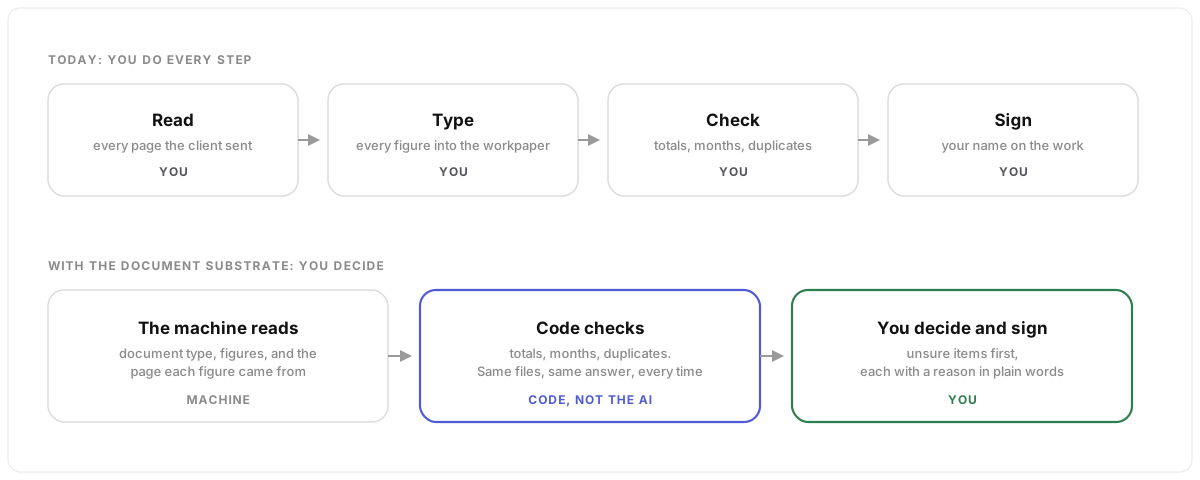
Today one person reads every page, types every figure, checks every total and signs. With the Document Substrate, the machine reads, code checks, and you decide. Your name still goes on the work. You just stop spending most of the day copying numbers.
Under the hood
The model does three jobs: it suggests a document type, reads the figures into a fixed set of fields for that type, and answers questions. It never adds anything up. Totals, footing and comparisons across documents run in code, so the same files always give the same verdict. Twenty-two document types have field definitions and eighteen have arithmetic checks.
Six stages, one step at a time
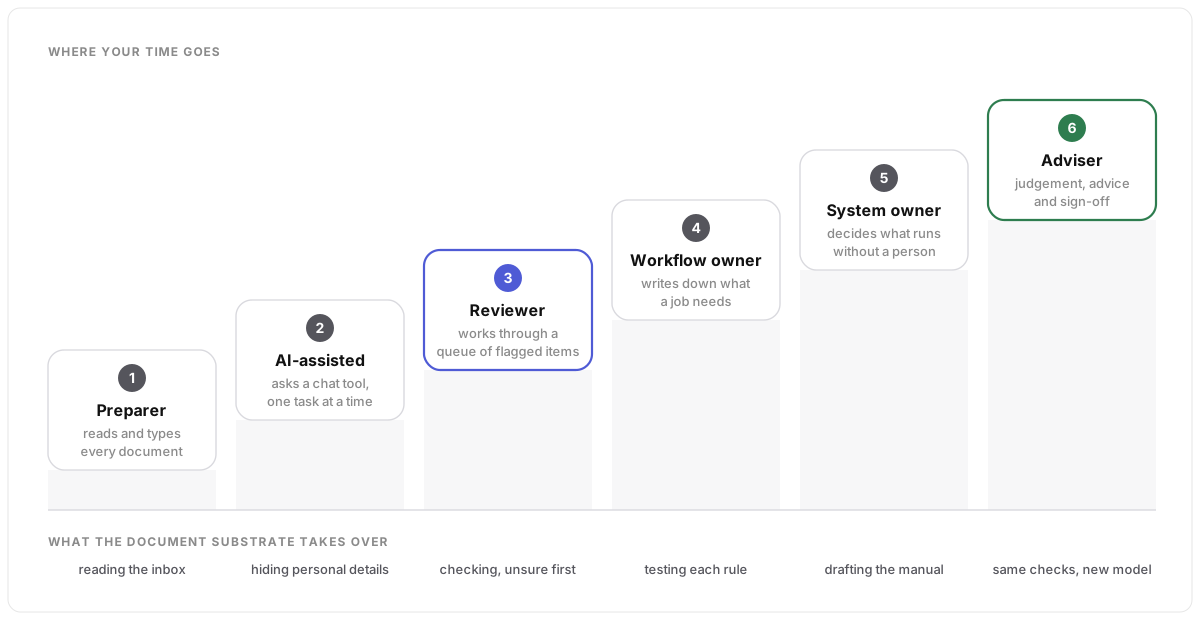
Each stage moves some of your time from production to judgement. Not everyone needs to reach stage 6, and most practices have people at three or four stages at once. That is normal.
Under the hood
The stages are adapted from roadmaps written for finance teams adopting AI. Stage 3 is the turning point: it is where the work changes from doing to reviewing. Stages 4 and 5 are about writing down what the firm knows, so the system checks each job the way the firm’s seniors would.
Stages 1 and 2: stop pasting client documents into chat
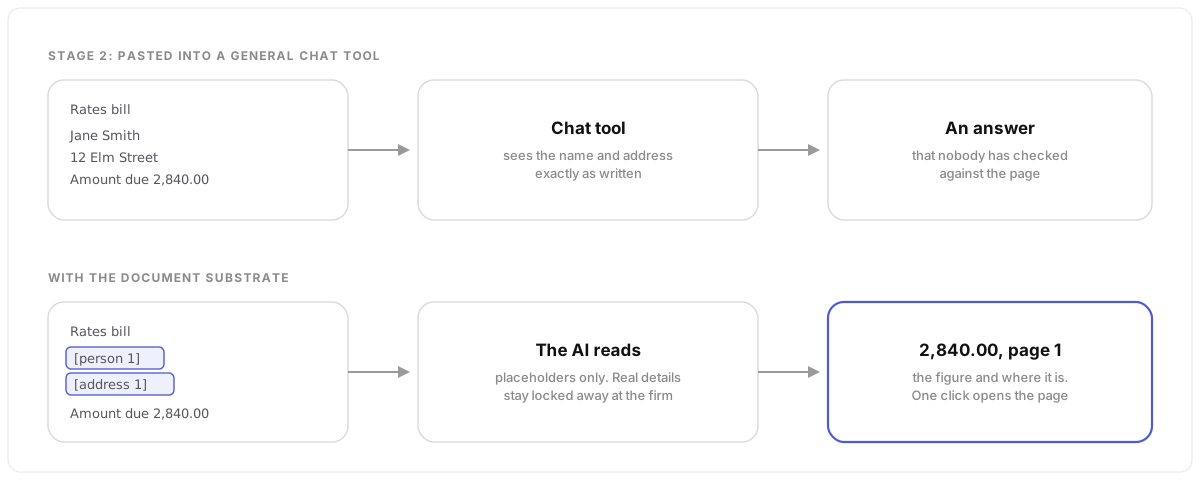
At stage 1 you read and type everything. At stage 2 you ask a chat tool for help, one task at a time. That is faster, but the chat tool sees the client’s name and address, and nothing it gives back has been checked against the page. The Document Substrate swaps personal details for placeholders before the AI sees anything, and every figure comes back with the page it was found on.
Under the hood
Redaction runs in three stages on every page: pattern rules for values with a fixed shape or a checksum (IRD numbers, bank accounts, company numbers, emails, phone numbers), a model pass for names, organisations and addresses, and an independent check. Real values are encrypted into a vault and restored on the server only for an authorised person, with every restore written to an audit log. A figure that cannot be found on its page is flagged, never passed.
Stage 3: work through one queue
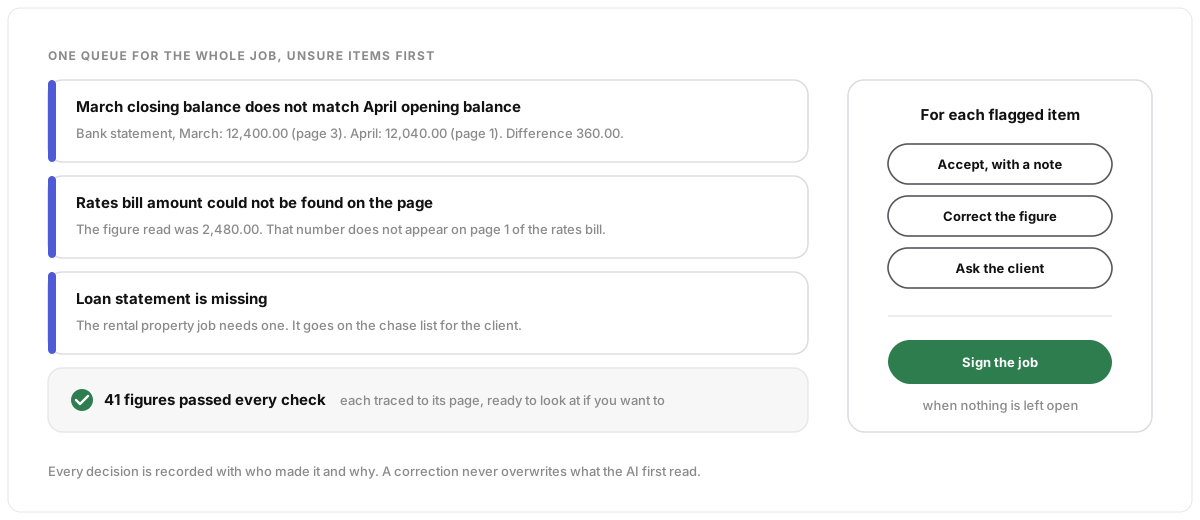
At stage 3 you stop preparing and start reviewing. Everything the system was unsure of goes into one queue, unsure items first, each with a reason in plain words and the figures it compared. You accept it, correct it, or ask the client. Everything that passed every check is already traced to its page, ready to look at if you want to.
Under the hood
Rules come in a handful of declared kinds: two figures agree within a
tolerance (reconcile), statements chain from one closing
balance to the next opening balance (continuity), and nothing
is counted twice (unique). A finding names the exact values it
read from each document. Corrections are stored separately with the
author, the time and the reason, so the AI’s first reading is never
overwritten.
Stages 4 and 5: write down what the firm knows
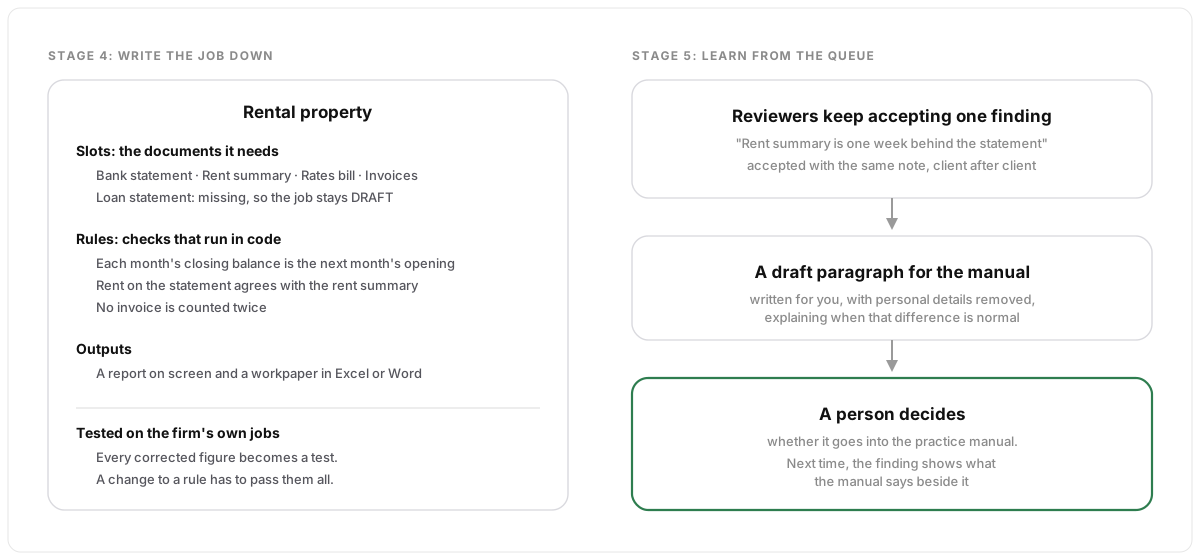
At stage 4 you write down what a recurring job needs: the documents, the checks, and what a finished workpaper looks like. That is a workflow, and every corrected figure becomes a test it has to keep passing. At stage 5 you look after several workflows together, and learn from the queue: when reviewers keep accepting the same finding, the system drafts a paragraph for the practice manual and a person decides whether to add it.
Under the hood
A workflow definition names its slots, rules and output template, and states what a passing run must not be read as concluding. Rules are data, not code, so their formulas can be shown to a reviewer. The practice manual is versioned markdown with one set of chapters per engagement type. A build-time test checks that every rule a chapter names exists and that every workflow’s rules are covered. The manual explains the checks; it never changes them.
Stage 6: the work clients pay for
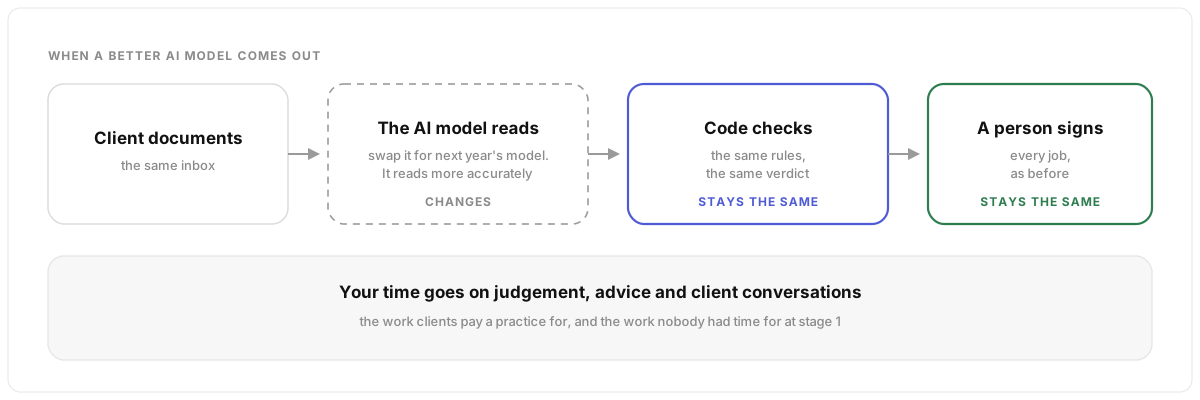
At stage 6 your time goes on judgement, advice and client conversations. When a better AI model comes out, it reads more accurately, but the checks and the sign-off stay the same, so the verdict on a file does not depend on which model read it. There is no stage 7. From here, the firm keeps improving how it works as the tools change.
Under the hood
Every change to the AI’s behaviour, including a new model, has to pass evaluation suites built from the firm’s own rated answers and corrected figures: field accuracy, no invented figures, classification, redaction and chat answers. For redaction, zero leaks is the pass mark. The rules engine makes no model call, so a model change cannot change a verdict on the same figures.
The full article: Making an Accounting Practice AI-Compatible: Six Stages for Staff.