How it’s put together
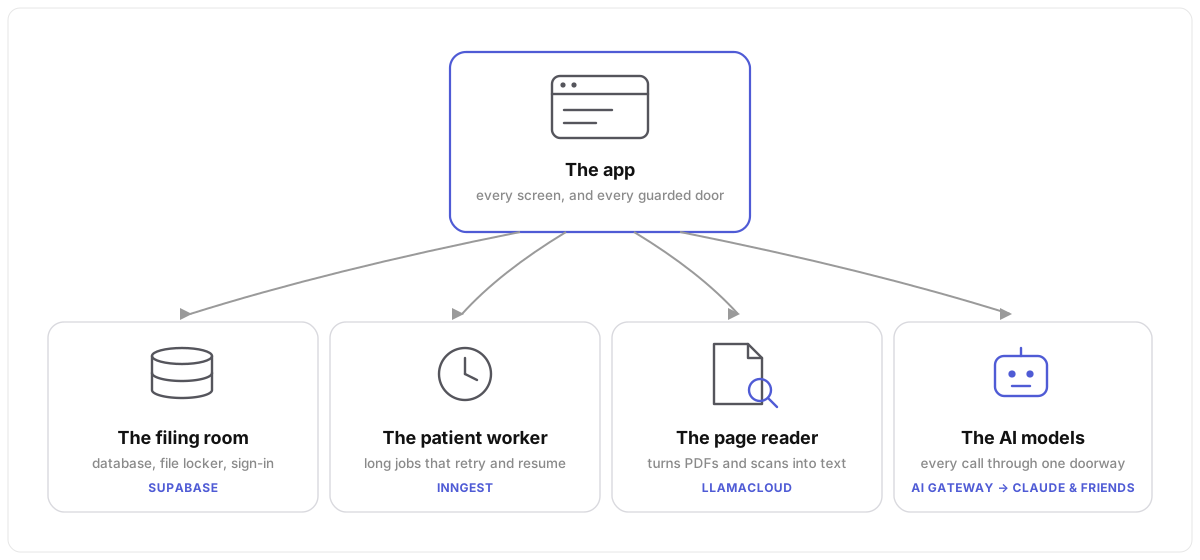
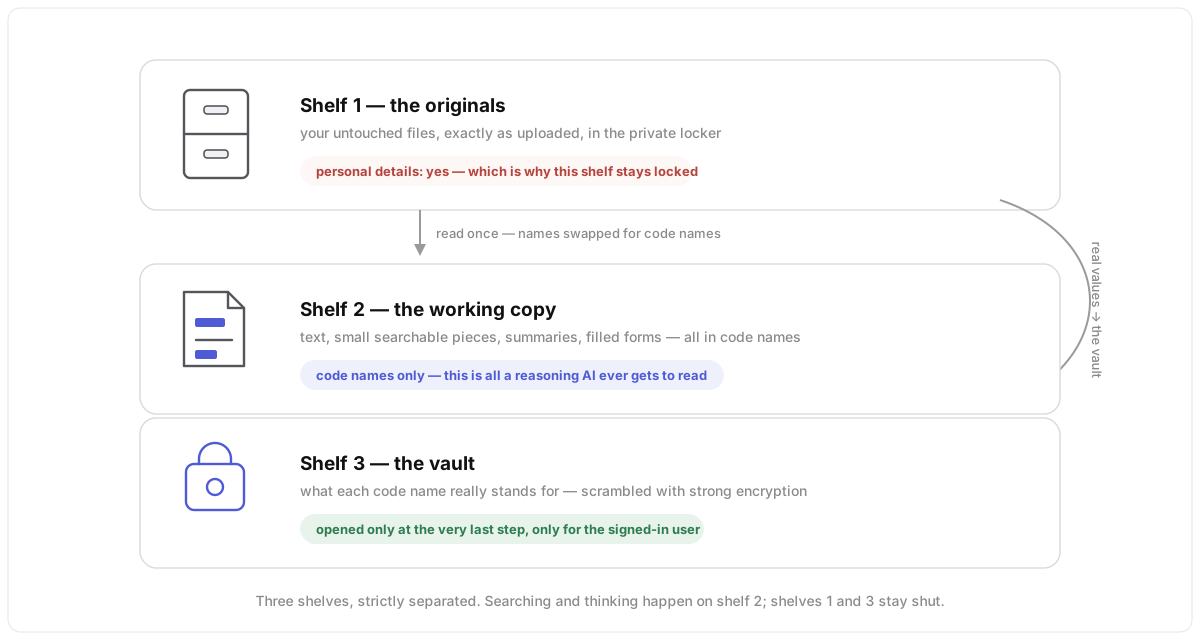
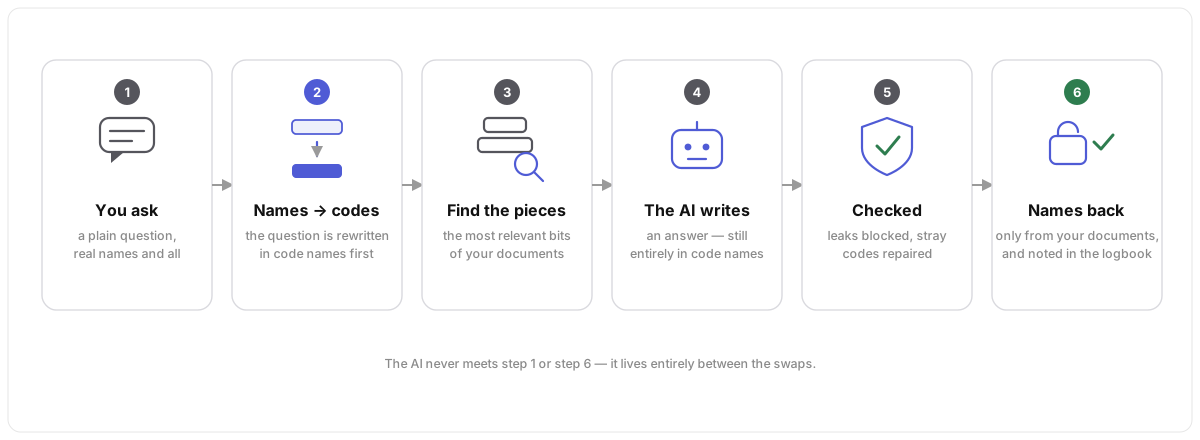
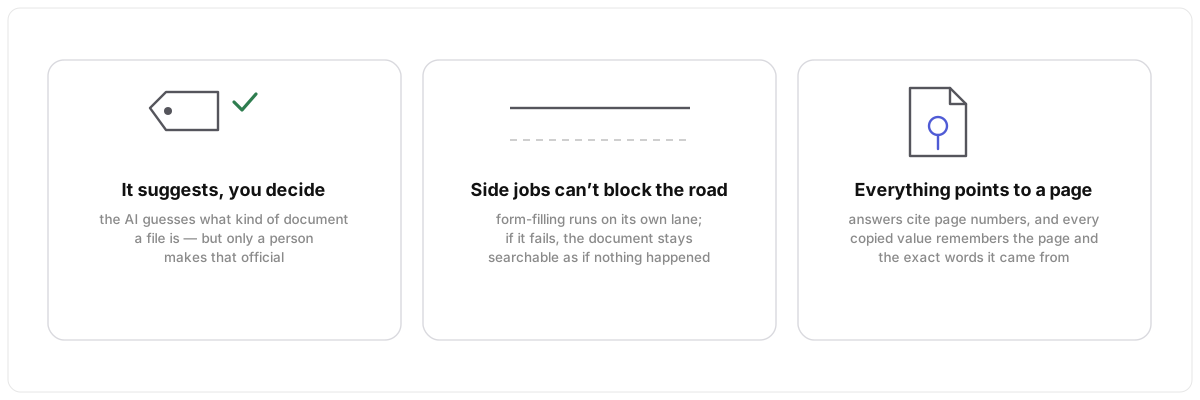
Document Substrate is a small number of pieces, each with strict rules about what it may touch. Four pictures: the pieces, the three shelves of memory, a question’s journey, and the house rules.
Five pieces, each with one job
The app talks to four helpers: a filing room that remembers everything, a patient worker for slow jobs, a page reader for PDFs and scans, and the AI models — which are only ever reached through one doorway.
Under the hood
Next.js App Router; Supabase for auth, Postgres + pgvector, and the private
source-documents bucket; Inngest for durable background functions
(every pipeline step is a retryable step.run); LlamaParse / LlamaExtract on
LlamaCloud; models via the Vercel AI Gateway through slots in
lib/ai/models.ts (fast = Haiku, smart = Sonnet,
embedding = text-embedding-3-small) — never a provider SDK directly.
No Python services, no extra vendors.
Three shelves of memory
This is the architecture’s one big idea. Originals stay locked. Everything the system searches and reasons over lives on a working-copy shelf written entirely in code names. What the code names really mean sits on a third shelf, encrypted, opened only at the very last step.
Under the hood
Layer 1: Storage bucket (raw PII). Layer 2: document_pages,
document_chunks (page-aware, 800 / overlap 100, vector(1536), HNSW),
document_summaries, document_extracts — placeholders only, and
embeddings index only this layer. Layer 3: document_entities, AES-256-GCM
per value, one placeholder per document
([A1B2C3D4_PERSON_1] — the prefix stops two documents minting the
same token). audit_log records every reveal.
A question’s journey
Six steps, and the AI only exists in the middle four. Your real words go in at step 1 and come back at step 6 — everything between happens in code names.
Under the hood
redactQuery() resolves names to tokens via a blind index (no decryption
at query time); retrieval runs over the redacted chunks; the output guard runs
before hydration; hydrate() is scoped to the documents the answer actually
used, throws on an empty scope, and writes an audit_log row when it reveals.
Citations deep-link by page number — there are no bounding
boxes.
Three house rules
They come up everywhere, so they get their own picture: the AI suggests and a person confirms; side jobs run separately so they never block the main line; and every answer and every copied value points back to a page.
Under the hood
Classify writes documents.classification, never documents.type —
bespoke extraction only runs against a human-confirmed type. Extraction lives on
its own extract_status lane and never touches documents.status.
Grounding re-locates every scalar leaf into document_extract_fields with
page + character span, or marks it unlocated so an invented figure is
visible.