How answers stay good
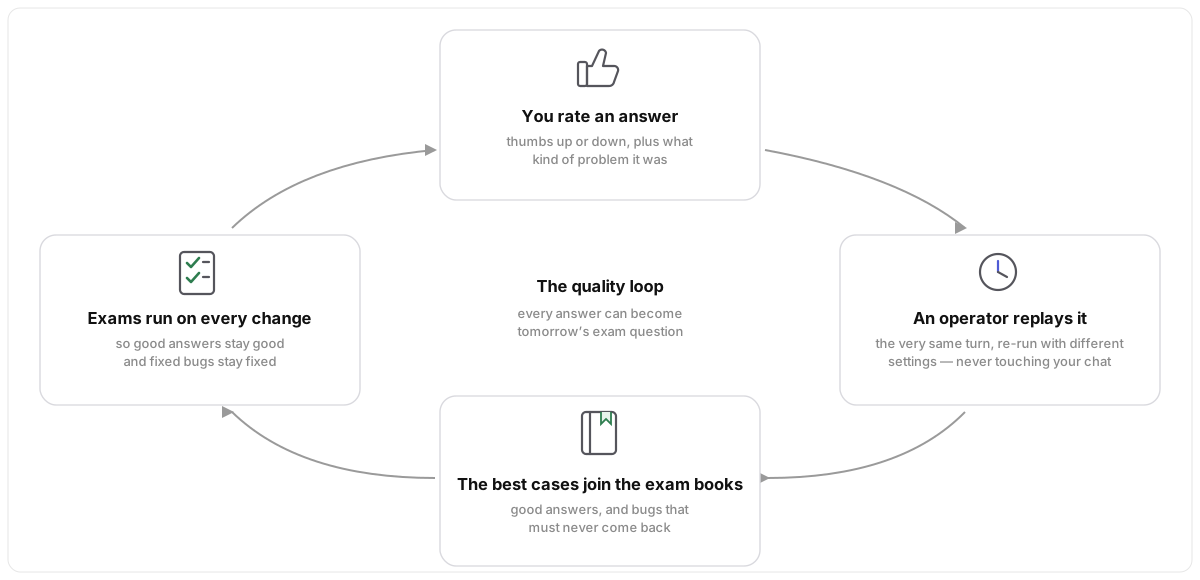
Ordinary tests can’t tell a good answer from a bad one — so the system sits exams instead, built from real questions it once got right or wrong. Four pictures: the loop, the exam books, the two kinds of marking, and when the exams run.
The quality loop
It starts with a thumbs-up or thumbs-down on a real answer. An operator replays that exact turn — same question, same retrieved pages, different settings — and decides whether it belongs in the exam books. From then on, every change to the system re-sits that exam.
Under the hood
Every chat answer writes a trace; ratings attach to traces; the triage
inbox at /admin/traces shows rated turns and turns the output guard
flagged (most guard actions are silent repairs no user would think to rate).
There is deliberately no quick-triage shortcut — the promote decision is made
with the replay in front of you, varying model, prompt version, temperature or
the question itself. Replays run against the turn’s original retrieval
context and never touch the user’s chat.
Two exam books
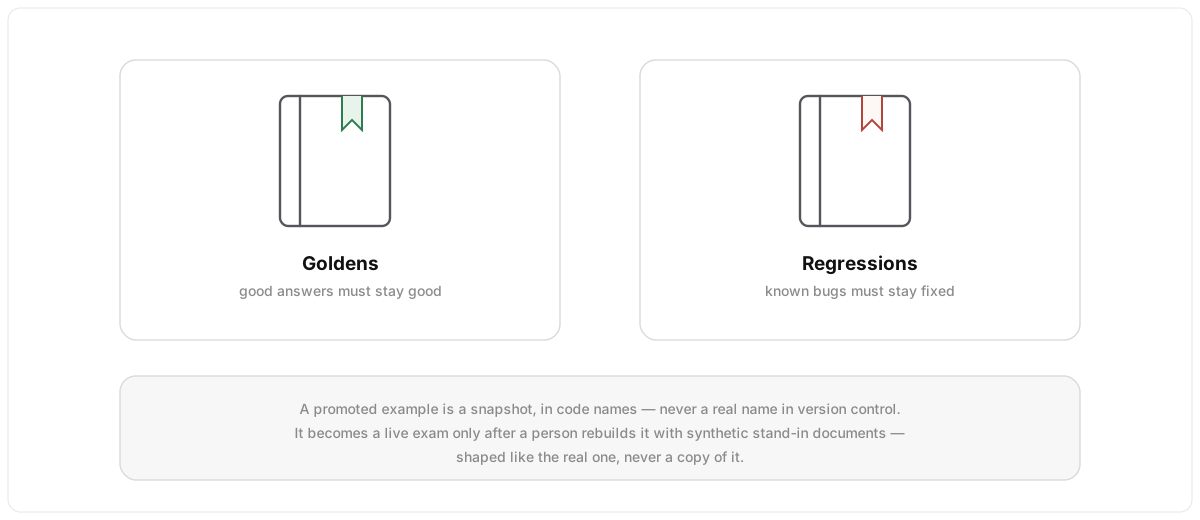
Goldens: answers that were right and must stay right. Regressions: bugs that were fixed and must stay fixed. A newly promoted example is a snapshot — it only becomes a live exam once a person rebuilds it with synthetic stand-in documents, so the exam can run anywhere without a single real name.
Under the hood
Promotion does three things: stamps the trace (promoted_to), writes an
inert fixture (evals/golden/ / evals/regressions/, stored redacted),
and upserts a Langfuse dataset item (orbital-goldens / orbital-regressions)
— the dataset item is the executable half, replayed by
pnpm goldens:replay. Curated cases live in
evals/corpus/chat-cases.ts; the synthetic corpus
(pnpm seed:evals) is pinned by id under a hidden Evals collection.
Choose the kind by what the fixture proves: a golden asserts a value, a
regression asserts a behaviour.
Two kinds of marking
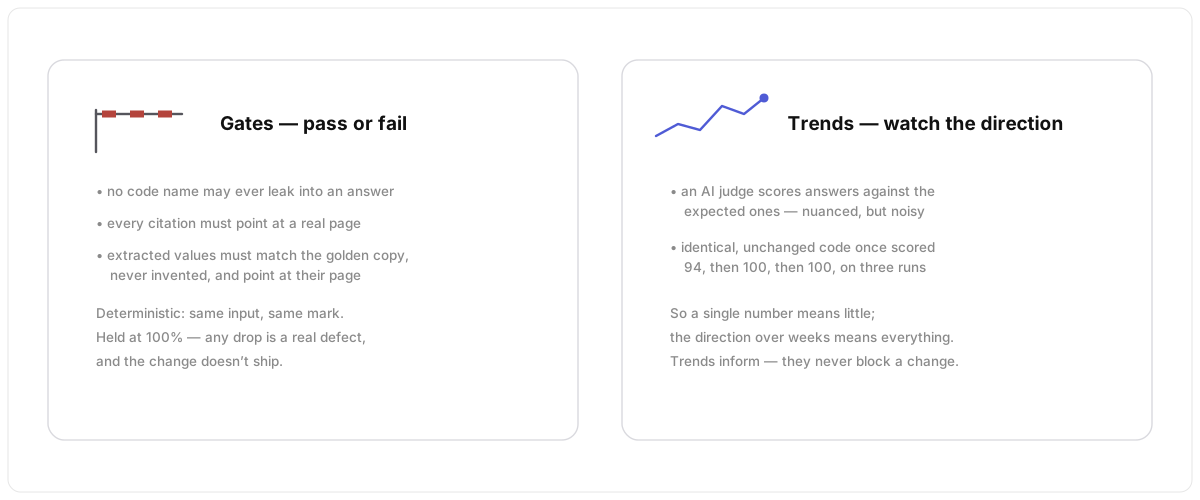
Gates are pass/fail and give the same mark every time: no leaked code names, citations that resolve, extracted values that match. Trends are marked by an AI judge — useful, but noisy enough that only the direction matters, never one number.
Under the hood
Gate suites (deterministic scorers): chat-golden
(CitationsResolve, NoPlaceholderLeak), extraction
(SchemaValid, FieldAccuracy, NoFabrication, Grounded), redaction
(NoLeak must be 1.0), manual-reach, skill-selection.
Trend suites (judged): chat-golden-quality, skill-execution,
manual-grounded. They are separate files because evalite reports one
percentage per file, and blending them made both unreadable. The one genuine bug
this harness has caught: a redaction placeholder surviving into a visible
answer.
When the exams run
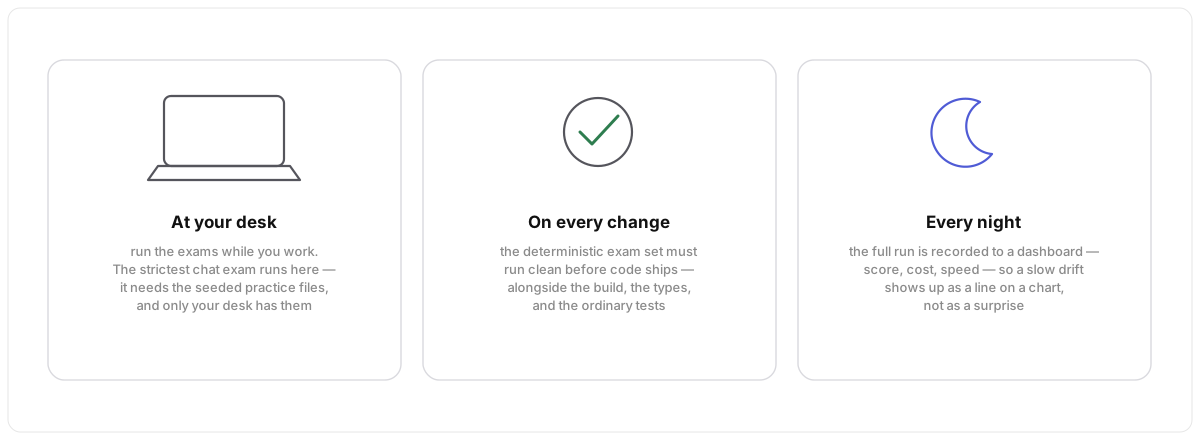
Three moments: at your desk while changing things (the strictest chat exam runs only here, because it needs the seeded practice files), on every change in CI, and every night — with each run recorded, so quality drift shows up as a line on a chart instead of a surprise.
Under the hood
pnpm eval runs everything once; pnpm eval:gates is the CI set
(with SKIP_DB_SUITES=1, which drops chat-golden — so run
pnpm eval evals/chat-golden.eval.ts locally before merging chat-path
changes); pnpm eval:trends is local-only and never gates. One caveat
the documentation states: the gate runner asserts the suites ran clean, not that
they scored 100% — scores are read from eval_runs history, shown at
/admin/eval-runs grouped by experiment × model × prompt version with
pass rate, cost and p50 / p95 latency. pnpm ab:compare judges two variants
pairwise with order randomised — read it as a quality / cost / latency
trade-off, not an automatic ship.